Cooler Bag Design for Wine and Fresh Produce Retail: Functional Priorities and Summer Stocking Strategy
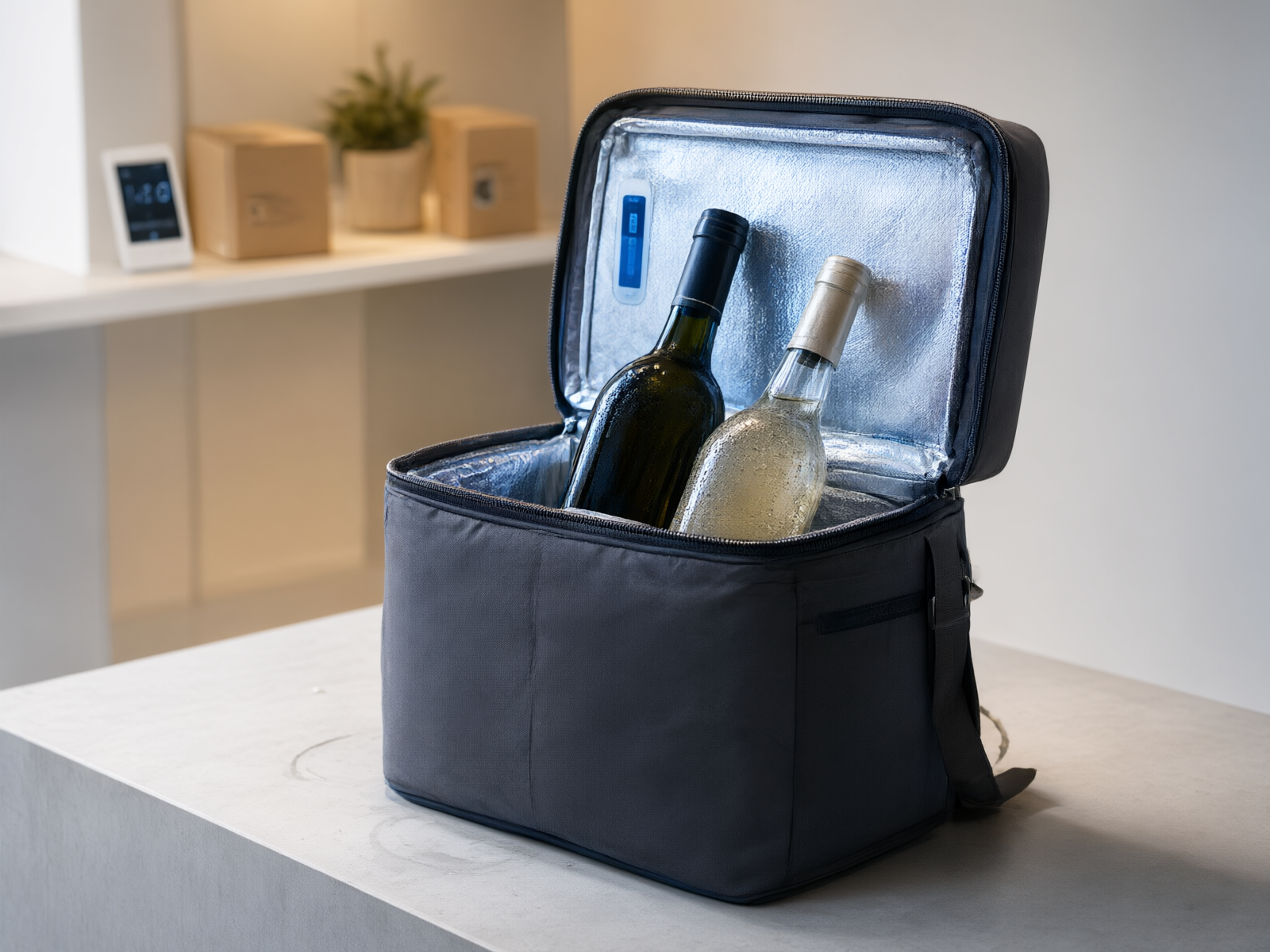
Cooler bags in retail are shifting from supplementary packaging to core quality assurance infrastructure. For wine and fresh produce retailers, a bag that meets thermal standards directly determines product integrity across the last mile. Drawing on our manufacturing experience, we break down the functional design requirements and procurement timing that matter most.
Wine Cooler Bags: Temperature Stability Comes First
Wine, craft beer, and sake are temperature-sensitive. White and sparkling wines require serving temperatures between 6–12°C; red wines between 15–18°C. In summer delivery scenarios, the cooler bag must maintain these ranges for 2–3 hours.
The insulation material and thickness set the performance ceiling. High-density EPE foam at 5–8mm thickness balances thermal efficiency with cost. Structurally, wine bottles are heavy and fragile, so load-bearing capacity and reinforced bases are non-negotiable design requirements — thickened bottom panels, compartmentalized dividers to prevent bottle contact, and heat-sealed seams instead of stitched construction. These details determine the practical lifespan of a wine cooler bag. On the exterior, wine retail demands strong brand alignment, so bag printing and color schemes must match the brand's visual identity.
Fresh Produce Cooler Bags: Multi-Zone Management and Leak Prevention
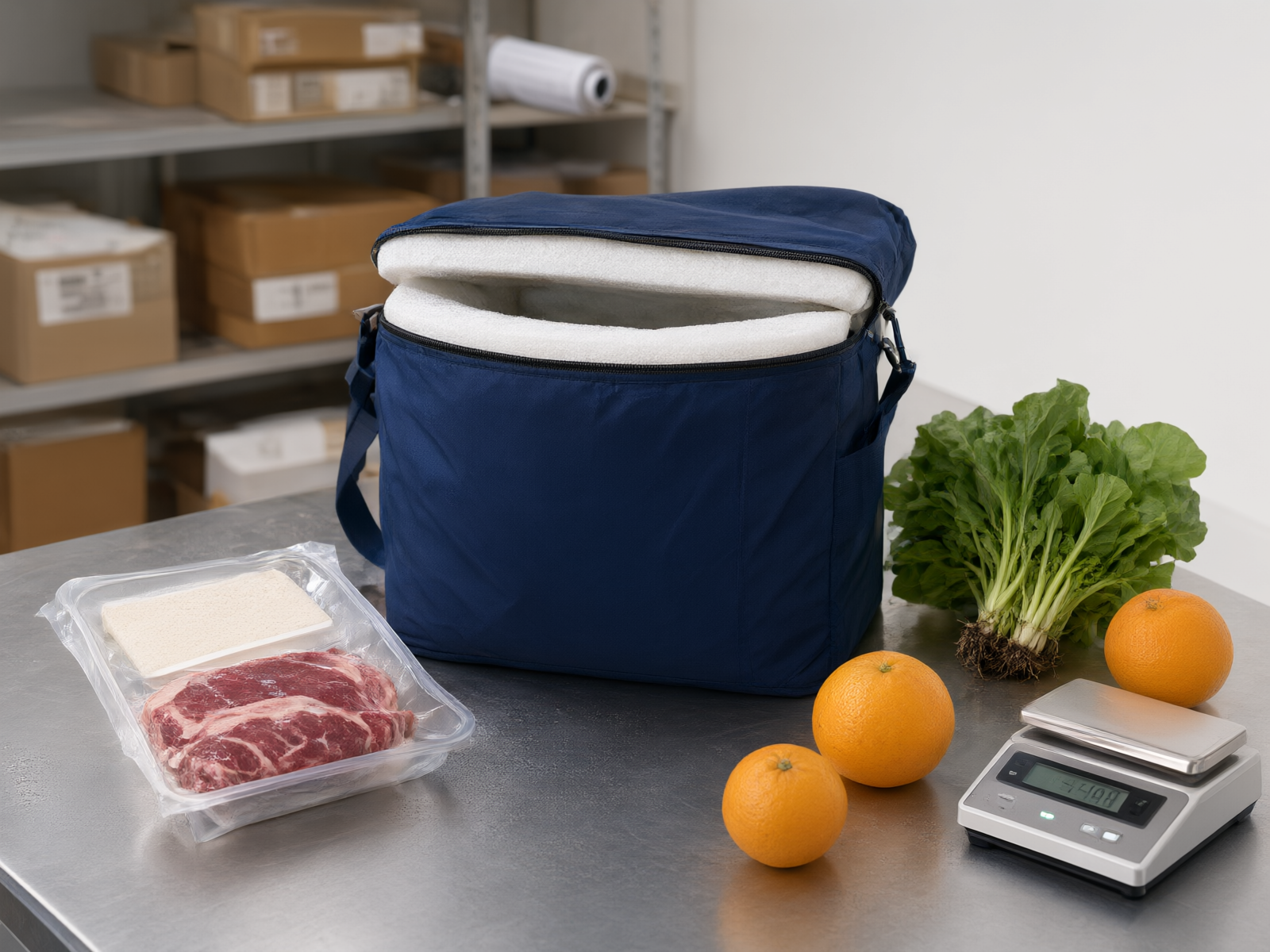
Fresh produce demands more complex temperature control than wine. Fresh meat requires 0–4°C, fruits and vegetables suit 5–8°C, and frozen goods demand -18°C or below. Multi-zone design is becoming standard in premium fresh delivery — through internal dividers and layered insulation of varying thickness, a single bag can cover multiple temperature zones simultaneously.
The inner lining's leak-proof treatment cannot be skipped. Blood and juice leakage during fresh produce transport is routine, so lining materials must use food-grade PEVA or aluminum foil composites with heat-sealed seams. Antibacterial treatment is another direction worth considering — summer heat and humidity accelerate bacterial growth, and silver-ion antibacterial agents in the inner lining can extend bag lifespan while reducing cross-contamination risk. Additionally, the sealing tightness of zippers or hook-and-loop closures directly affects thermal performance; procurement teams should request closed-state thermal duration test data from suppliers.
Summer Stocking: Lead Time and Specification Mix
Summer heat directly amplifies cooler bag demand. Based on our shipment data to retail clients, June through August consumption typically runs 2–3 times higher than other months, with orders concentrated in May and June. This means buyers need to place orders by April to allow for a 30–45 day production cycle.
Stocking volume should be configured at sales forecast × 1.5, with half held as safety stock for unexpected orders. On specifications, 3–5L mid-to-small capacity bags turn over fastest in summer and are the primary sizes for fresh delivery and wine retail — these should be prioritized. Bags above 10L are mostly used for bulk transport and can follow a more flexible stocking timeline. Regarding materials, summer heat and humidity raise moisture resistance requirements; aluminum foil composite linings outperform plain non-woven fabric linings in both thermal persistence and durability.
Manufacturing Capability Alignment
ECOWAY PACKAGING has over 16 years of experience in cooler bag manufacturing. Our factory is BSCI certified, with full industry chain integration from raw materials to finished products. We support OEM customization with a minimum order of 500 pieces, and our design team can develop targeted insulation solutions based on different retail scenarios' thermal requirements. Summer peak-season production slots are typically locked two months in advance, so buyers with stocking plans should engage early.
Cooler bag quality is not solved by simply adding another layer of material — it requires coordinated alignment across material selection, structural design, process standards, and supply chain responsiveness. Understanding these design logic points enables more accurate procurement decisions.